
The last time I took my car for a service, I lost an entire Tuesday. I dropped it at 7am, caught an Uber to the office, borrowed a colleague’s car at 5pm to collect it, then sat in traffic on the N1 wondering why a routine oil change had consumed twelve hours of my life. The workshop was competent enough. The process was the enemy.
This is the quiet grievance that mobile mechanic services in Cape Town have turned into a business model. Companies like iCAR Mechanics and Michanic Mobile Mechanics do not compete on price or technical wizardry. They compete on the radical proposition that car maintenance should fit around your day, not demolish it.
The Trust Problem Nobody Talks About
South African car owners distrust mechanics because the traditional model strips away every signal that would let you verify honesty. You hand over your keys to a stranger, disappear for hours, then return to a bill you cannot fully interrogate. The work happened behind a wall. The parts were replaced out of sight. You are expected to nod and pay.
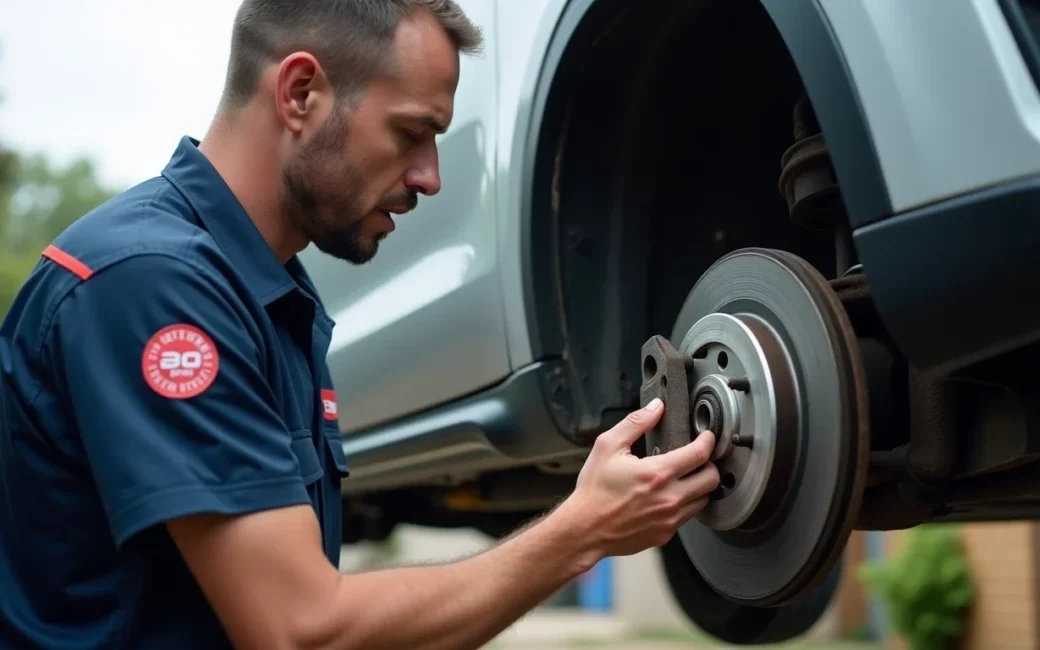
Mobile mechanics invert this dynamic by performing work where the customer can see it. A brake pad replacement happens in your driveway. The technician explains the wear pattern while you hold the old part. The diagnostic report arrives as a conversation, not a cryptic line item. Michanic Mobile Mechanics, which also trades as iCAR mobile mechanics, built its pitch around this transparency: upfront quotes before anyone touches a spanner, and qualified mechanics who answer questions in real time rather than hiding behind a service desk.
The psychological shift is stark. When you watch the work happen, suspicion has nowhere to hide. The mechanic cannot recommend a repair you do not need because you are standing there, asking why. This is not about technology or marketing cleverness. It is about removing the architectural conditions that make distrust rational.
How Online Booking Changes Who Converts
The phone call is a conversion killer. Consider what happens when a potential customer must ring a workshop for a quote. They need to call during business hours, wait on hold, describe symptoms to a receptionist who cannot price them, then wait again for a mechanic to call back. Each friction point loses people. The busy professional puts it off. The anxious first-timer finds another workshop. The comparison shopper moves to the competitor with instant pricing.
Online booking with transparent quoting collapses this funnel. A customer visiting Michanic’s platform at 10pm on a Sunday sees exactly what a major service costs, selects a time slot, and receives confirmation without speaking to anyone. The decision to book becomes a thirty-second action rather than a multi-day project.
Businesses that operate this way report conversion rates 20-30% above those stuck on manual quoting. Uncertainty is a tax on commitment. Remove the tax, and more people buy. For Cape Town mechanical repairs and services, this means capturing customers who would otherwise defer maintenance until something breaks catastrophically.
The Geography of Inconvenience
Cape Town’s layout punishes the traditional workshop model. The City Bowl is dense with apartments and scarce parking. The Atlantic Seaboard has wealthy car owners who value time above almost anything. The Northern Suburbs sprawl across distances that make a midday workshop trip a half-day expedition. A fixed-location mechanic in Bellville cannot efficiently serve a customer in Camps Bay. The traffic geometry forbids it.
iCAR Mechanics operates from a workshop at 29A Mansell Road in Killarney Gardens, but its mobile units cover all three of these zones with collection and delivery service. This is not mere coverage expansion. It is strategic positioning around the specific friction of Cape Town’s urban form. The customer in Sea Point does not drive to Killarney Gardens. The mechanic comes to her office parking bay while she works.
The logistical challenges are real. Mobile units must carry comprehensive tool sets and diagnostic equipment. They navigate peak-hour congestion on the N1, N2, and M5. They work outdoors, exposed to Cape Town’s wind and winter rain. Operational constraints are offset by dramatic overhead reduction. No large workshop rent, no property rates, no waiting room furniture. The savings fund the mobility.
The Hybrid Model That Solves What Mobility Cannot
Pure mobile mechanics face hard limits. Some repairs need a vehicle lift. Some need parts storage that a van cannot carry. Some need controlled conditions that a driveway in the Cape Doctor cannot provide.
iCAR Mechanics’ Killarney Gardens workshop appears designed for exactly these boundaries. The mobile unit handles routine services, diagnostics, and brake or clutch work at customer locations. Complex engine or transmission repairs move to the fixed workshop. This hybrid approach preserves the customer-facing convenience while retaining technical capability that pure mobile operations sacrifice.
It also creates a reputation architecture that purely mobile services struggle to build. A permanent address signals permanence. Customers know where to find the business if something goes wrong. The workshop validates the vans as part of an established operation rather than a fly-by-night service.
What the On-Demand Economy Taught Us About Car Maintenance
South African consumers have been trained by Uber, Mr D Food, and Checkers Sixty60 to expect that services come to them, on demand, with transparent tracking and pricing. This conditioning extends to any service where the traditional model imposed unnecessary movement on the customer.
Vehicle maintenance was always an an obvious candidate for this shift because the traditional model was so egregiously wasteful. You take a functioning car to a place, leave it, arrange alternative transport, then return to collect it. The car moves twice. You move three times. The only entity that benefits from this choreography is the workshop, which gets to batch-process vehicles in its own facility.
Mobile mechanics recognise that this batch-processing convenience for the provider is a cost imposed on the customer. Reversing the flow, bringing the mechanic to the car, eliminates the customer’s transport burden entirely. For remote workers now common in post-pandemic Cape Town, the mechanic arrives during a work-from-home day without disrupting video calls or deadlines. The service integrates into life rather than interrupting it.
Building Reputation Without a Shopfront
Traditional workshops rely partly on physical presence for credibility. The signage, the bays, the waiting room with stale coffee: these signal “established business” to nervous customers. Mobile mechanics must construct equivalent trust through every touchpoint.
Professional presentation becomes non-negotiable. Branded vans, clean uniforms, technicians who explain rather than condescend. Online reviews on Google and HelloPeter replace the reassuring shopfront. Each on-site visit is simultaneously a service delivery and a marketing event: neighbours see the branded van, the careful work, the satisfied customer.
Warranties on parts and labour provide the final reassurance. The customer who cannot return to a familiar workshop needs explicit guarantees that the mobile mechanic will stand behind the work. Michanic’s emphasis on qualified mechanics addresses this directly: certification is portable proof of competence that does not depend on a fixed location’s accumulated reputation.
The Real Competitive Advantage
Mobile mechanics in Cape Town are winning because they identified a customer acquisition bottleneck that the industry had normalised, then designed operations specifically to remove it.
The insight is transferable. Any service business that forces customers through inconvenient logistics, opaque pricing, or trust-destroying information asymmetry is vulnerable to an operator who restructures around the customer’s actual experience. The workshop did not fail because its mechanics were unskilled. It failed because its business model treated the customer’s time, anxiety, and transportation as acceptable costs.
For founders and sales managers watching this space, the lesson is precise. Operational innovation in customer acquisition often looks less like better marketing and more like removing the reasons people hesitate to buy. The mobile mechanic does not need a cleverer Facebook ad. They need only to eliminate the Tuesday I lost, and promise me I will never lose another.